- This event has passed.
| Full Title: | Effect of Socio-demographic Factors on Time to Surgical Consultation and Hip/ Knee Replacement Surgery for Osteoarthritis Patients in British Columbia, Canada |
| Speaker: | M Mushfiqur Rahman, MSc |
| Arthritis Research Centre of Canada, Vancouver, BC, Canada | |
| Date/Time: | Saturday, December 1, 2007, 1200PM |
| Venue: | ISRT Seminar Room |
PURPOSE: Our objective was to conduct separate survival analyses of time to the first surgical consultation and time to the first total joint (knee or hip) arthroplasty (TJA) for osteoarthritis (OA) patients using population based administrative data.
METHODS: All hospital admissions as well as office visits covered by the Medical Services Plan of British Columbia, Canada, for the fiscal years 1991/2 to 2003/4 were analyzed. OA patients were identified by at least one visit to a health professional or one hospitalization with an ICD-9 code of 715. TJA cases were identified using the procedure codes 935 and 934.1 for hip and knee, respectively. Socioeconomic status (SES) was ranked from 1 (lowest) to 5 (highest) based on mean household income for the patient’s area of residence (census enumeration area). A cohort of 34,851 OA patients (age ≥ 20 years), diagnosed by a health professional other than orthopedic surgeon (OS) (91% by general practitioners) in 1996/7, were followed up to 2004 for their first surgical consultation. A total of 9,635 adult OA cases, who had their first OS visit in 1996/7, were followed up for their first TJA in 8 years. Kaplan-Meier curves and Cox proportional hazards (PH) models were used to evaluate the effects.
RESULTS: OS consultation rates for newly diagnosed OA cases were lower for women compared with men (hazard ratio, HR = 0.86, p < 0.01) (Table). After adjusting for age and gender, patients with lower SES had significantly lower HR of OS consultations compared to those with higher SES (HR = 0.89, p=0.02, for the lowest SES quintile). Following an OS consultation, SES was not a significant predictor of the first TJA. The interaction between age and gender was significant for patients who had a TJA after an OS consultation. Compared with men age <70, the HR for women age <70, men age ≥70 and women age ≥70 were 1.5, 3.3 and 3.0, respectively (p<0.01). CONCLUSIONS: Women diagnosed with OA were somewhat less likely than men to see an orthopedic surgeon. Among younger patients, women were more likely than men to undergo TJA following a surgical consultation but the reverse was true among older patients. OA patients with low SES consulted orthopedic surgeons less frequently than those in a high SES category.

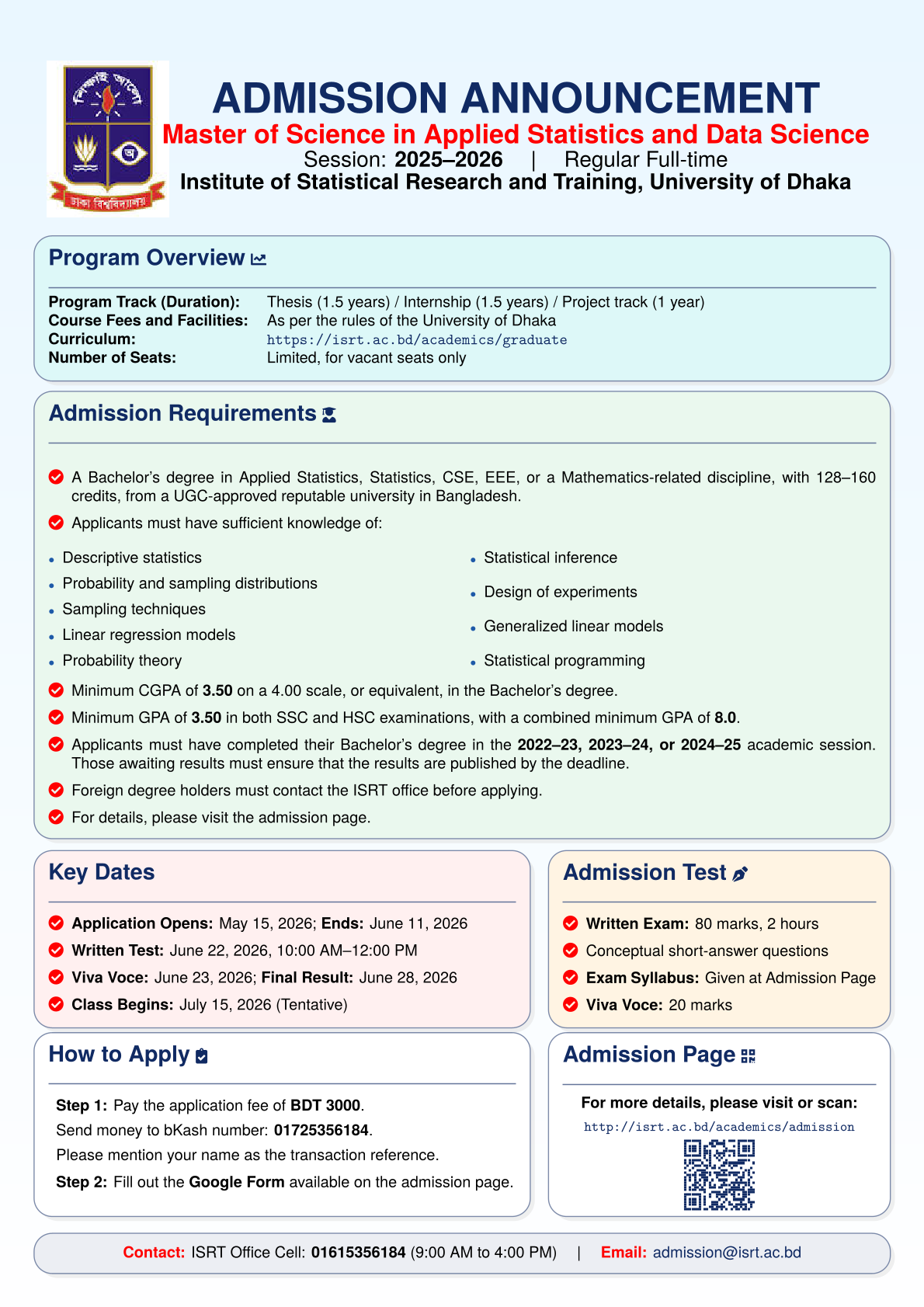
The Institute of Statistical Research and Training (ISRT), University of Dhaka, has extended the application deadline for admission to its MSc in Applied Statistics and Data Science (Regular Full-time) program ... [ Read More ]
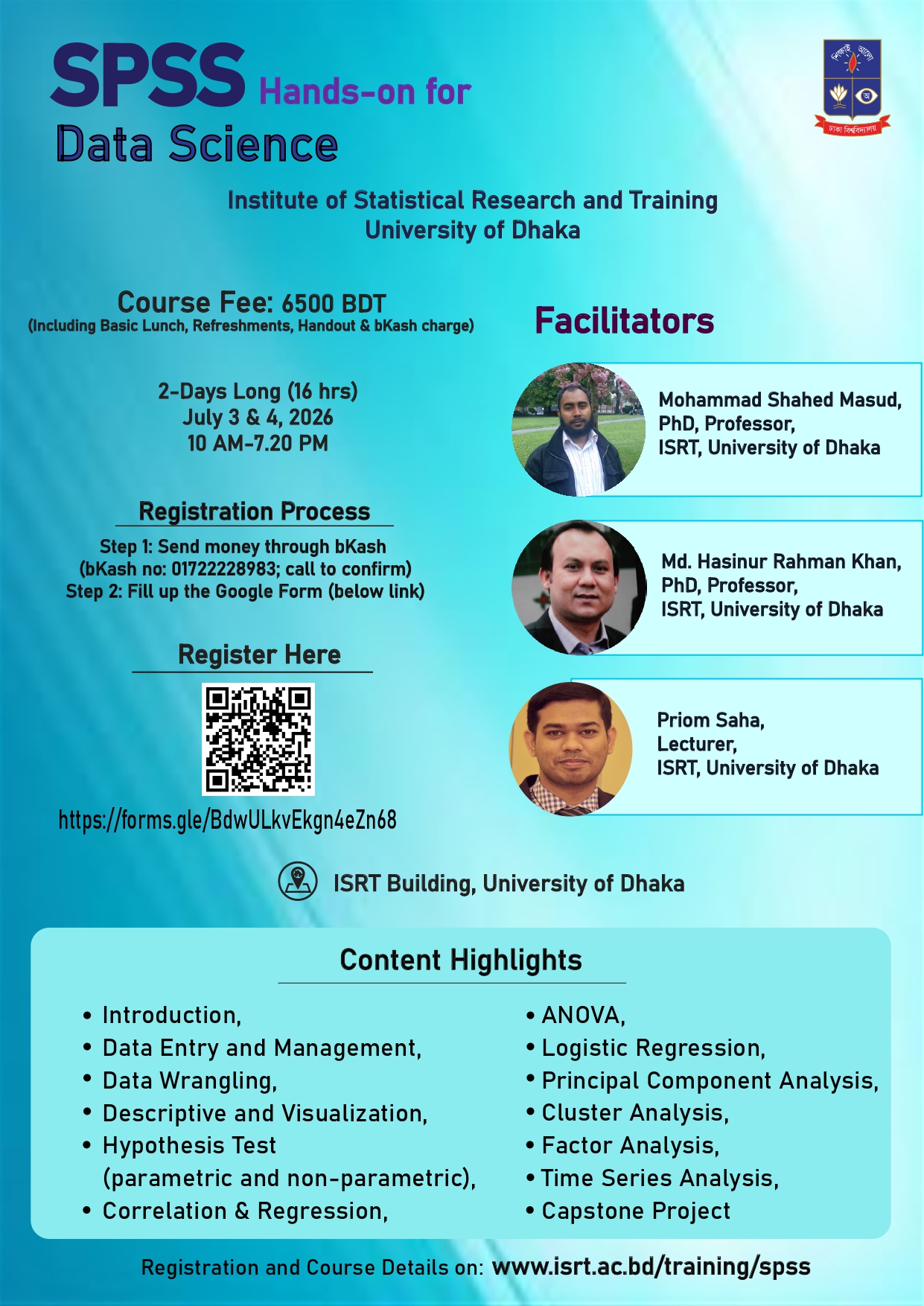
The Institute of Statistical Research and Training (ISRT), University of Dhaka, is pleased to announce a two-day intensive training course titled “SPSS Hands-on for Data Science”, designed to provide participants ... [ Read More ]
The Institute of Statistical Research and Training (ISRT), University of Dhaka, is pleased to announce admissions for the Master of Science in Applied Statistics and Data Science program for the ... [ Read More ]
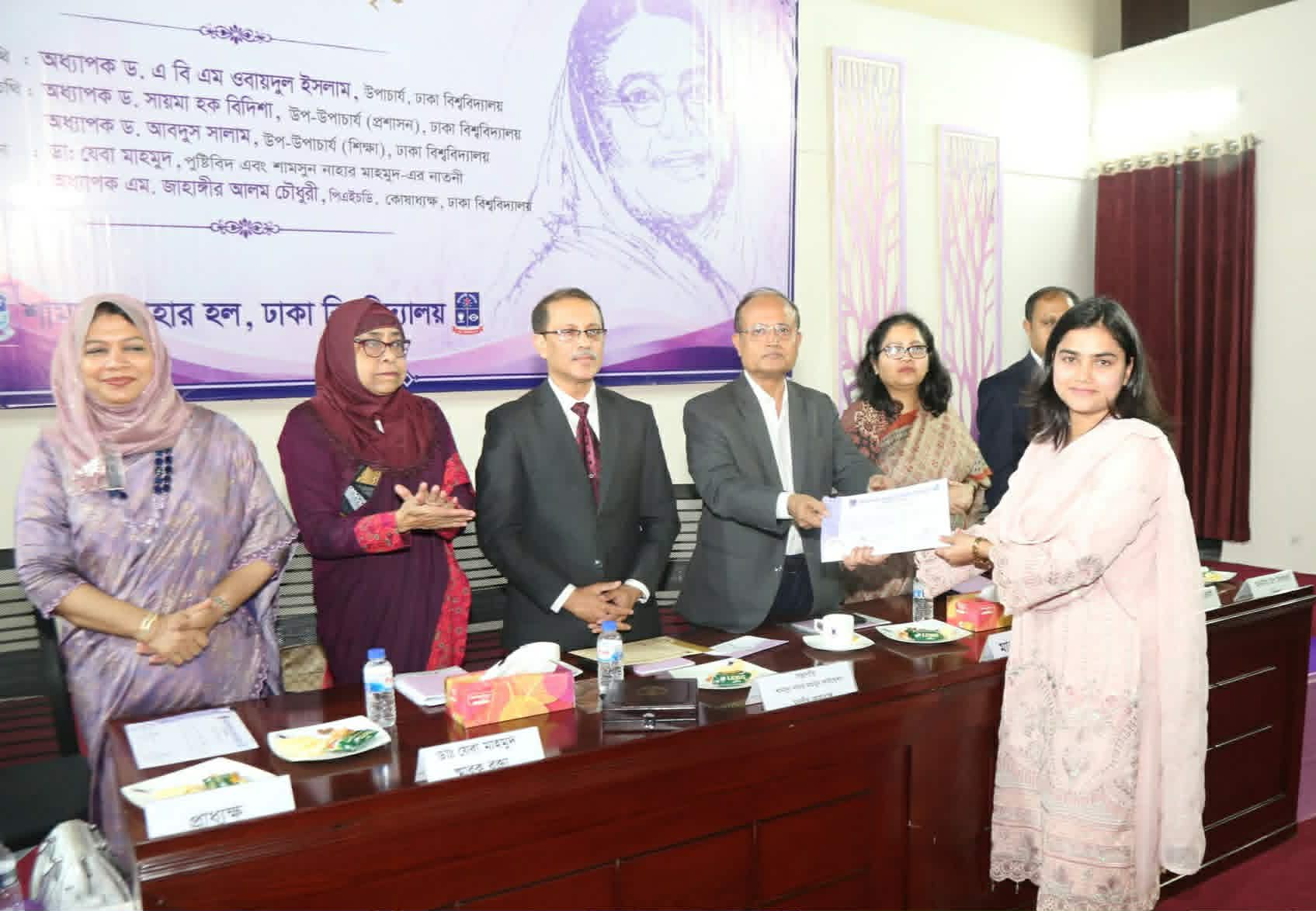
The Institute of Statistical Research and Training (ISRT), University of Dhaka, proudly congratulates ISRT Batch-25 graduate Kamrun Naher Koli on receiving the Shamsun Nahar Mahmud Foundation Merit Scholarship awarded by ... [ Read More ]
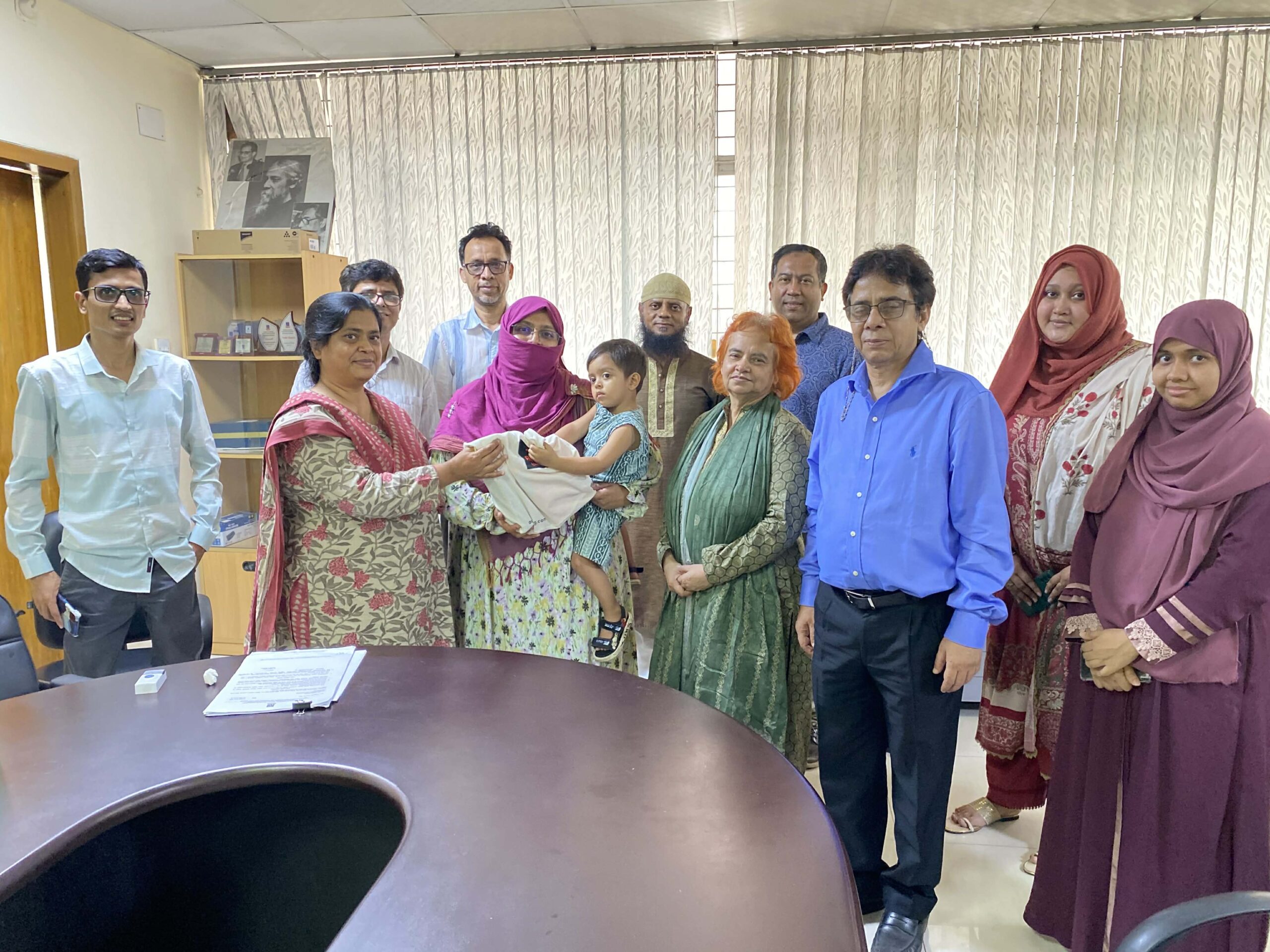
The Institute of Statistical Research and Training (ISRT) recently hosted a farewell gathering in honor of Tasnim Ara as she embarks on a new academic journey to pursue higher studies ... [ Read More ]
Director,
Institute of Applied Statistics
and Data Science (IASDS)
University of Dhaka
Dhaka 1000, Bangladesh